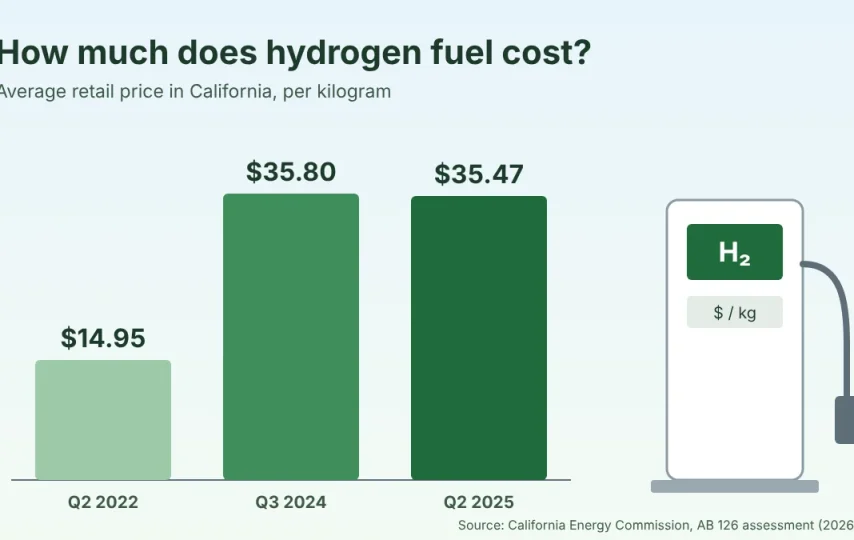

How much does hydrogen fuel cost? In the US, hydrogen for cars costs roughly $27 to $36 per kilogram (kg), based on the latest 2025–2026 data. The average retail price in California, where most retail stations are, was $35.47/kg in the second quarter of 2025, according to the California Energy Commission (CEC). The Department of Energy’s latest price survey found an average of $27.44 per gasoline gallon equivalent in July 2026, and one gallon equivalent is about 1 kg of hydrogen.
That makes a full tank in a fuel cell car cost roughly $150 to $200, and each mile three to four times more expensive than in a gasoline car. Below are the price history, fill-up and per-mile math, the reasons hydrogen is so expensive and the free-fuel deals that change the picture for new car buyers.
Hydrogen Fuel Cost per Kilogram, 2022–2026
Hydrogen is sold by the kilogram, not the gallon. The DOE notes that 1 kilogram of hydrogen equals about 1 gallon of gasoline in energy content, so a price of $30/kg is like paying $30 for a gallon of gas, before you account for the fuel cell car’s better efficiency.
| Period | Price | Where | Source |
|---|---|---|---|
| Q2 2022 | $14.95/kg | California average | CEC |
| September 2024 | $34.55/kg (record high at the time) | California monthly average (Platts) | S&P Global Commodity Insights |
| September 2024 | $29.99/kg Iwatani; $29.96/kg Air Products; $36/kg at a growing number of True Zero stations | Prices at operators’ stations | S&P Global Commodity Insights |
| Q3 2024 | $35.80/kg | California average | CEC |
| Q2 2025 | $35.47/kg | California average | CEC |
| July 2026 | $27.44 per gasoline gallon equivalent (about 1 kg) | DOE survey average, 18 data points | DOE Clean Cities price report |
In other words, the California price more than doubled between 2022 and 2024 and was still about $35/kg in mid-2025. The DOE figure is lower, but the DOE itself calls it a very small sample of 18 data points, so treat it as a rough guide rather than the price at your local pump.
“Hydrogen price per kg” can also mean the cost of producing hydrogen. That figure leaves out what happens before the fuel reaches your car: the DOE counts delivery and dispensing as a separate cost on top of production.
How Much Does It Cost to Fill Up a Hydrogen Car?
The CEC estimates that at $36/kg, filling an empty tank can cost up to $180. The second-generation Toyota Mirai holds 5.6 kg of hydrogen, and the 2026 model has an EPA-estimated range of up to 402 miles, about 72 miles per kilogram:
| Hydrogen price | Full Mirai tank (5.6 kg) | Fuel cost per mile |
|---|---|---|
| $27.44/kg (DOE survey average, July 2026) | About $154 | About $0.38 |
| $30/kg (Iwatani and Air Products, September 2024) | About $168 | About $0.42 |
| $36/kg (many True Zero stations, September 2024) | About $202 | About $0.50 |
Sources: prices from the DOE and S&P Global (see the table above). Tank size and range from Toyota. Fill-up and per-mile figures are our own calculation and assume the car reaches its EPA range; real-world range can be lower.
For comparison, a gasoline car that gets 30 mpg costs about $0.13 per mile at the July 2026 national average of $3.84 per gallon (our own calculation). Hydrogen therefore costs roughly three to four times more per mile than gasoline at today’s prices.
Why Is Hydrogen Fuel So Expensive?
- Delivery and dispensing are costly. A DOE analysis put the cost of delivering and dispensing hydrogen at $8.17 to $11.35 per kilogram for stations selling 450 to 1,000 kg per day (in 2016 dollars), not counting the cost of producing the hydrogen or paying off station equipment. In the DOE scenarios, hydrogen is trucked to stations as high-pressure gas or as a liquid.
- Stations sell little fuel. California’s network was used at only 13% of its capacity in the second quarter of 2025, and daily dispensing fell 30% between the third quarter of 2024 and the second quarter of 2025, according to the CEC. The CEC names high prices, unreliable stations and closures as likely reasons for the drop.
- Lower credit values. Station operators earn credits under California’s Low Carbon Fuel Standard, but the credit price fell from about $200 to about $48 by June 2025, so they earn fewer dollars per credit (CEC).
- Natural gas, labor and materials. Most hydrogen sold at California stations is made from fossil gas by steam methane reforming, and developers cite rising natural gas costs and higher labor and material costs due to inflation (CEC).
- Supply shocks. After an incident involving a high-pressure hydrogen trailer in Colton, California, on February 24, 2026, these trailers were grounded from filling operations, causing shortages and outages at most gaseous hydrogen stations; in early April 2026, 21 stations were offline because of the disruption (Hydrogen Fuel Cell Partnership). We cover the station network in detail in how many hydrogen fuel stations there are in the US.
Cheaper hydrogen will not automatically mean cheap fuel at the pump. The DOE’s Hydrogen Shot aims to cut the cost of clean hydrogen by 80%, to $1 per kilogram by 2031, but delivery and dispensing alone cost several times that in the DOE analysis above.
Free Hydrogen Fuel Cards: What They Cover
Automakers offset the high price with prepaid fuel. Toyota includes $15,000 of complimentary hydrogen with the Mirai, for six years for buyers or three years for lessees, whichever comes first. At $36/kg, that buys about 417 kg, or roughly 30,000 miles at the Mirai’s EPA range (our own calculation). Once the card is used up or expires, you pay the full pump price. Terms vary by automaker and model year, so check the current offer before you sign.
What It Means for You
If you already drive a fuel cell car, budget about $150 to $200 per fill-up and keep track of how much is left on your fuel card. If you are thinking of buying one, compare the total cost after the free fuel runs out with a battery-electric car you can charge at home, and check how many working stations are near you. Our guides to how hydrogen cars work and hydrogen fuel cell pros and cons cover the rest of the trade-offs.
Frequently Asked Questions
Is hydrogen fuel cheaper than gas?
No. At $27 to $36 per kilogram, hydrogen costs about $0.38 to $0.50 per mile in a Toyota Mirai, compared with about $0.13 per mile for a 30 mpg gasoline car at July 2026 prices. Free fuel cards from automakers can cover the difference for the first few years.
How much does it cost to fill up a Toyota Mirai?
The Mirai holds 5.6 kg of hydrogen, so a fill-up from empty costs about $154 at $27.44/kg and about $202 at $36/kg. The California Energy Commission estimates up to $180 to fill an empty tank at $36/kg.
What is the price of hydrogen per kg in California?
The average retail price was $35.47 per kilogram in the second quarter of 2025, according to the California Energy Commission. Prices vary by station operator: in September 2024, many stations charged about $30 or $36 per kilogram.
Will hydrogen fuel get cheaper?
The DOE aims to bring the cost of clean hydrogen down to $1 per kilogram by 2031, but a DOE analysis puts delivery and dispensing alone at about $8 to $11 per kilogram. There is no official forecast for the retail price, so treat any promise of cheap hydrogen with caution.