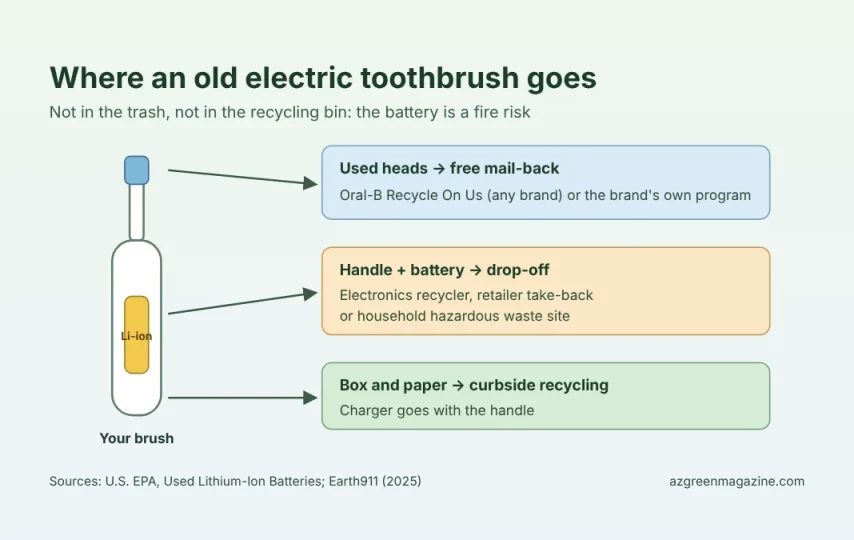

To dispose of an electric toothbrush, keep it out of both the trash and the curbside recycling bin: the handle contains a rechargeable battery, and the EPA warns that lithium-ion batteries and devices containing them can be crushed in garbage trucks and sorting equipment and start fires. Take the handle to an electronics recycler, a retailer take-back program or a household hazardous waste site, and send used brush heads to a free mail-back program.
Here is how to handle each part, step by step.
Before You Start
An electric toothbrush has three parts that go to different places:
- The handle, which holds the motor, circuit board and a sealed rechargeable battery (lithium-ion in most current models; older and budget models may use nickel-metal hydride, and some brushes run on AAA batteries).
- The brush heads, a mix of plastic, metal and nylon bristles, which you replace every three to four months as the ADA recommends.
- The charger and packaging: the charger is a small electronic device; the cardboard box is ordinary recycling.
The main limitation: most electric toothbrushes are sealed, and removing the battery usually breaks the handle for good. Philips’ Sonicare manuals describe battery removal as a step that is “not reversible” (Philips Sonicare manual). Only open a handle you are sure you will not use again, and if a battery is swollen or damaged, do not open it at all.
How to Dispose of an Electric Toothbrush: Step by Step
1. Check whether it can still be used or fixed
If the brush only lost power, the battery may simply be worn out. iFixit, which publishes repair guides, argues that the best move is to replace the battery and keep using the device, although in many brushes, including Oral-B models, the battery is soldered in. Some brands repair their own handles: SURI, for example, says its aluminum handle is designed to be taken apart and repaired by the company. Do not donate or resell a used toothbrush; Hennepin County’s disposal guide notes that electric toothbrushes should not be reused.
2. Take off the brush head
Pull the head off the handle. It goes to a separate stream (step 5), and most electronics programs do not want it.
3. Run the battery down
If you plan to remove the battery, first run the brush until it no longer turns on. Philips’ instructions start with this step: take the handle off the charger and let it run until it stops.
4. Drop off the handle with its battery
You have two options:
- Leave the battery inside and take the whole handle to a certified electronics recycler, a retailer take-back program or a household hazardous waste collection point. The EPA notes that not all batteries are removable by the user and that devices with built-in batteries should still go to these sites.
- Remove the battery only if the manual explains how. Tape the battery terminals or put the battery in its own plastic bag, as the EPA advises, and take it to a battery drop-off point. Call2Recycle runs a drop-off network for rechargeable batteries.
Check before you go: Best Buy, for example, lists electric toothbrushes among the items its stores do not accept. Your city or county waste website is the quickest way to find the nearest site that does.
Never put a toothbrush handle, a loose battery or a charger in the curbside recycling bin. Lithium-ion batteries cause fires in garbage trucks and recycling facilities when they are crushed, according to the EPA.
5. Send the used heads to a mail-back program
Heads are too small and mixed for curbside recycling, but there are free U.S. options:
- Oral-B “Recycle On Us” accepts toothbrushes, refill brush heads, toothpaste tubes and floss containers of any brand. You request a free shipping label, fill any box and drop it at UPS. Electric toothbrush handles and battery parts are excluded (Earth911, August 2025).
- SURI recycles its own plant-based heads through a prepaid mailer in the U.S.
- TerraCycle programs change often. The Crest and Oral-B collection page now says that program has closed, and the Colgate program does not accept electric toothbrushes or their parts.
Collect heads in a jar or box and ship them a few times a year to cut down on shipments.
6. Recycle the charger and packaging
The charging stand or cable is a small electronic device and goes with the handle to an electronics recycler. The cardboard box and paper inserts go in curbside recycling; plastic blister packs usually do not.
7. If your brush uses AAA batteries
Some brushes, like quip’s AAA models, run on removable single-use batteries. Earth911 says most states allow alkaline batteries in the trash but recommends recycling them anyway, and California bans all batteries from household trash (Earth911). Use rechargeable AAA cells to avoid the problem.
Example: Where Each Part Goes
| Part | Contains | Where it goes | Cost |
|---|---|---|---|
| Handle (battery inside) | Motor, circuit board, Li-ion or NiMH battery | Electronics recycler, retailer take-back or household hazardous waste site | Usually free; check your local site |
| Loose rechargeable battery | Li-ion or NiMH cell | Battery drop-off (e.g., Call2Recycle), terminals taped | Usually free |
| Brush heads | Plastic, metal, nylon bristles | Oral-B Recycle On Us (any brand) or the brand’s own mail-back | Free |
| Charger | Electronics, cable | With the handle to an electronics recycler | Usually free |
| Box and paper inserts | Cardboard, paper | Curbside recycling | Free |
| AAA alkaline batteries | Single-use cells | Battery drop-off; trash only where state rules allow | Free to low |
Common Mistakes
- Throwing the whole brush in the trash “because it’s small”. Size does not matter: the battery is the fire risk.
- Putting it in the curbside recycling bin. The EPA says devices with lithium-ion batteries do not belong there either.
- Prying open a swollen or hot battery. Leave it in the handle, put the handle in a plastic bag and take it to a hazardous waste site.
- Assuming every store takes it. Call ahead or check the store’s list.
When to Call a Professional
You do not need a professional to drop off a toothbrush. If a battery is swollen, leaking or hot, do not try to remove it; take the whole device to your local household hazardous waste program and tell staff what is wrong.
How to Make the Next One Last Longer
The less often you buy a handle, the less e-waste you create. Choose a brush with a long warranty and widely sold heads, and look for brands with head recycling. Our list of the best eco-friendly electric toothbrushes compares five models on materials, battery and recycling. The same rules apply to wireless earbuds and headphones; see how long earbuds last.
Frequently Asked Questions
Can you throw away an electric toothbrush?
No. Electric toothbrushes contain rechargeable batteries, and the EPA says devices with lithium-ion batteries should not go in household garbage or recycling bins. Take it to an electronics recycler, a retailer take-back program or a household hazardous waste site.
Can you recycle electric toothbrush heads?
Yes, through mail-back programs rather than curbside bins. Oral-B’s free Recycle On Us program accepts refill brush heads of any brand, and SURI recycles its own heads.
How do you remove the battery from an electric toothbrush?
Follow the manual for your model. Philips describes running the battery flat, opening the bottom of the handle with a flathead screwdriver and breaking the battery connections. This destroys the handle, so do it only at end of life, and skip it entirely if the battery is damaged.
Does Best Buy recycle electric toothbrushes?
No. Best Buy lists electric toothbrushes among the items it does not accept for recycling. Use a local electronics recycler or household hazardous waste site instead.


